What Is the Database Assistant?
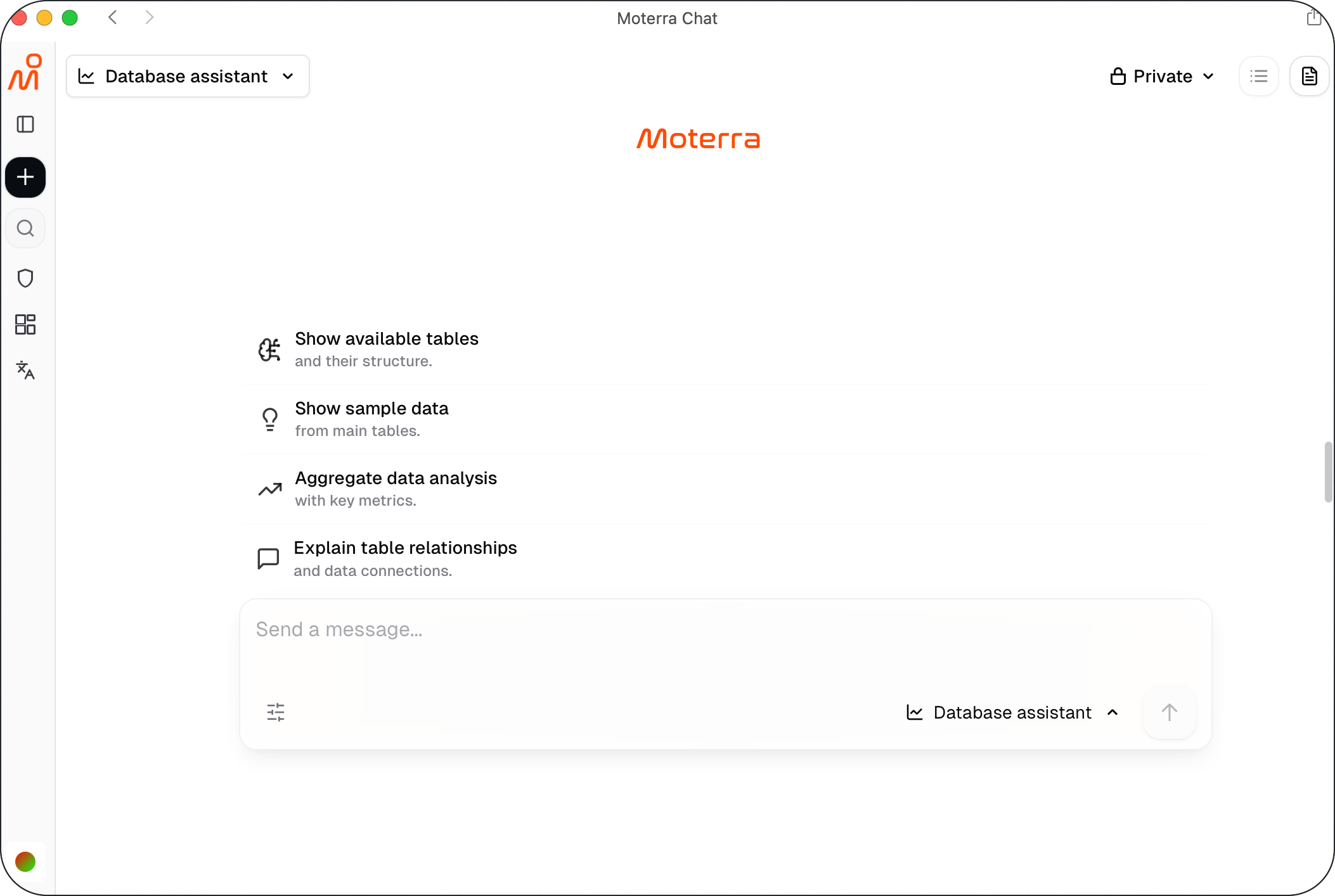
The Database Assistant is designed to help you work with structured data stored in databases. It allows you to ask questions about your data using natural language and get answers based on SQL queries executed on the database. The assistant focuses on factual, data-driven results based on actual query outputs.
Written By Kristė Vagnerytė
Last updated 8 months ago
What the Database Assistant Is Used For
You can use the Database Assistant to:
Ask questions about your data in natural language
Generate and execute SQL queries automatically
Retrieve and analyse data from database tables and views
Explore trends, patterns, and relationships in your data
Create charts and summaries based on query results
It is especially useful for analytics, reporting, and data exploration tasks.
How It Works
The Database Assistant translates your questions into SQL queries and runs them against the connected database.
Based on the results, it can:
Return structured answers
Explain insights found in the data
Create charts or documents when you explicitly ask for them
All outputs are based on real database results.
Working with Charts and Documents
When requested, the Database Assistant can:
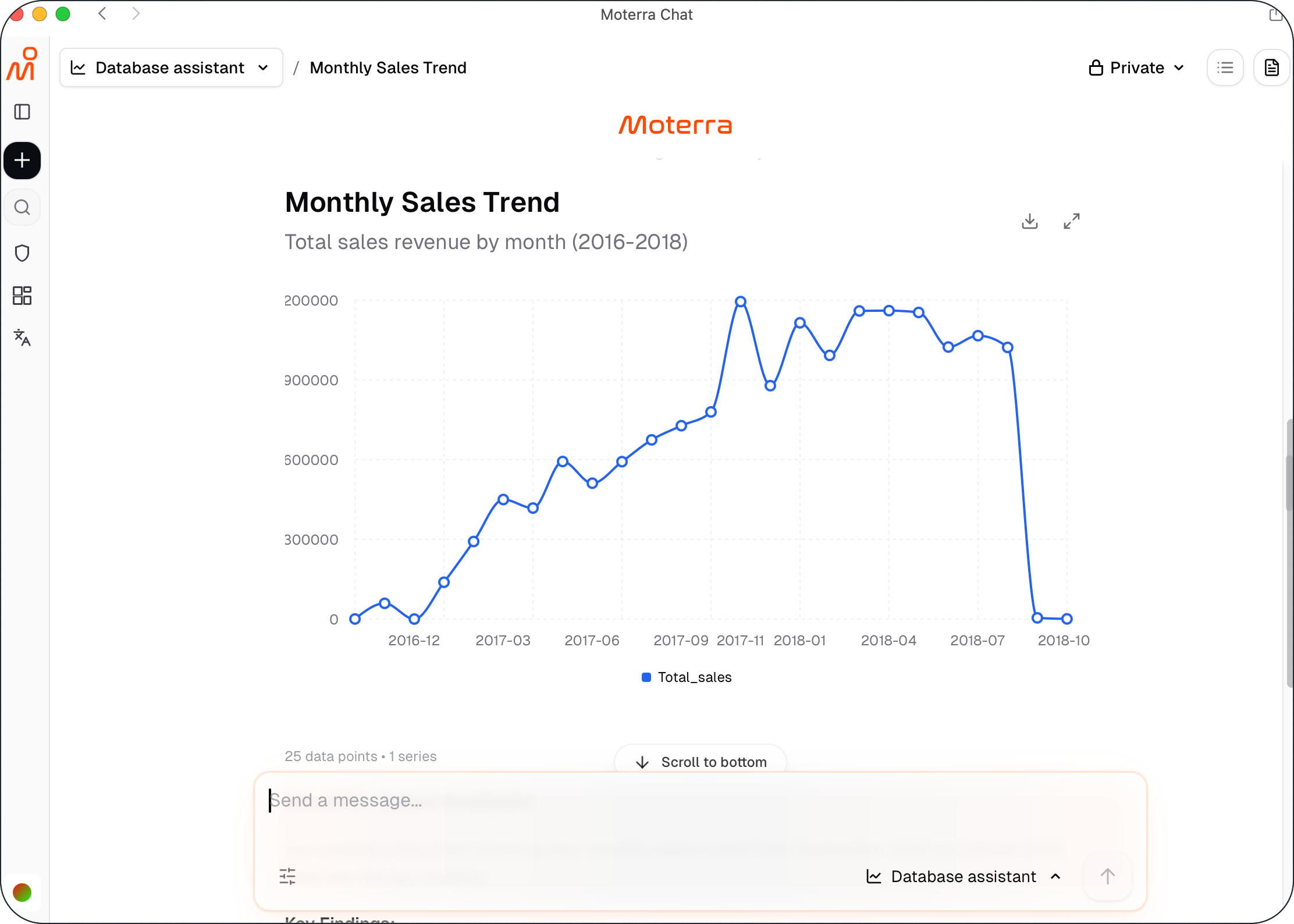
Create charts such as line, bar, pie, scatter, and area charts
Generate reports or summaries as documents
Charts and documents are created only upon explicit request.
Example request:
What are our sales by month? Create a line chart showing the monthly trend.
What the Database Assistant Does Not Do
The Database Assistant does not:
Accept uploaded files
Analyse attached documents or spreadsheets
Work with PDFs, DOCX, or CSV uploads
If your task involves uploading files or document analysis, you can use the General Assistant instead.
When to Use the Database Assistant
Use the Database Assistant when:
Your data is stored in a database
You want answers based on SQL queries
You need analytical insights or visualisations
You require precise, data-backed results
What to Read Next
Was this helpful?
Still need help? Ask the team